“It is privacy.”
To my question “What is love?”, answered me a seven-year-old girl in a calm and matter-of-fact manner as if I just asked her what her favorite color is.
That’s in a way related to the origins of the English word “love”.
“Love” comes from an old English word lufu; also from a root lubhyati “desire’, Latin ibet ‘it is pleasing’, libido ‘desire’, also by leave ‘permission’ and lief ‘dear, pleasant’.
So there is a lot to say about love.
First it is a desire, and this word desire too has an interesting origin.
Imagine in the beginning of human history where there were barely any man-made things around you: no buildings of any sort, no roads, no cars, no…..basically most of the things come into your sight when you walk down on a street in modern times.
So when you are out in the open on a clear, cool autumn night sitting in front of a nice campfire, what do you see when you look up?
Yes. Millions of stars!
It must have inspired the human heart in the same way since that very first humans looked up. There is even the same phrase both in English and in Chinese “reach for the stars”–伸手摘星 shen1shou3zhai1xing1.
“Wonder of wonders” thinking in the heart of the first Homo sapiens. “What are they? Bright and blinking?” And the longer he looks at them, the more mysterious, the brighter they appear. Unconsciously, he reaches out his hand: “down the stars!—I de-sire!”
And that’s–possibly–how the word “desire” comes from: de-‘down’ + sidus, sider-“star”. (And considering that with no books, no TV, no phone, no computer, the first humans must have spent a considerable amount of time on looking at the stars, for the word “consider” examine, is also based on sider, stars. Indeed, an awful lot of things they have figured out by examining the stars.)
Do not little children, puppies, or the first flowers, the first softest greens in spring time inspire some warm, glad, tender feelings in you? For “it is pleasing”, and the Romans, the Latin-spoken people call this feeling ibet, love.
Now when the seven-year-old girl answered me what she thought was love for her, she hit on the sense that it is a permission.
It is a permission, it is an invitation, it is a trust. So now I open my door to you, I show you my most private, my most vulnerable self. I could cry and I could laugh and I am in my most comfortable skin for I am with the person that loves me and I love.
The Chinese word 爱 ai4–after a whole morning’s search and think and consider–it still puzzles me.
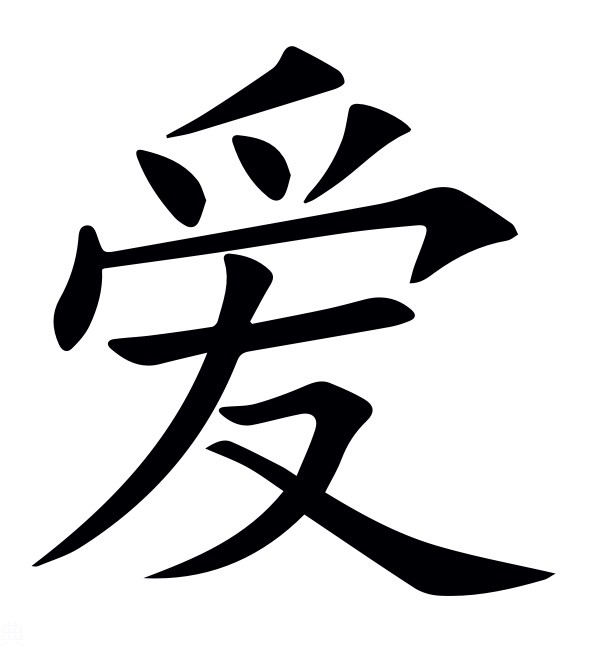
But this word is simplified only not very long ago–given the long history of how language evolves–from the traditional version:
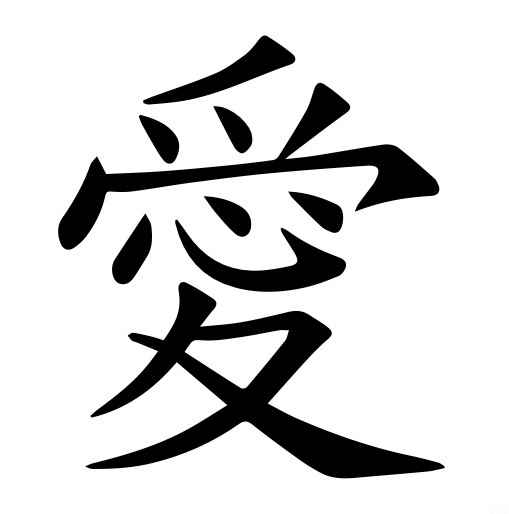
And it all comes from a guy who staggers around longing to show his heart to his lover:
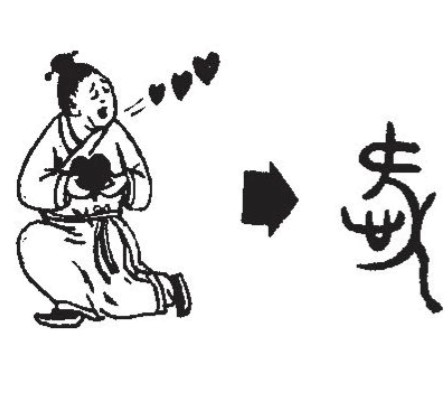
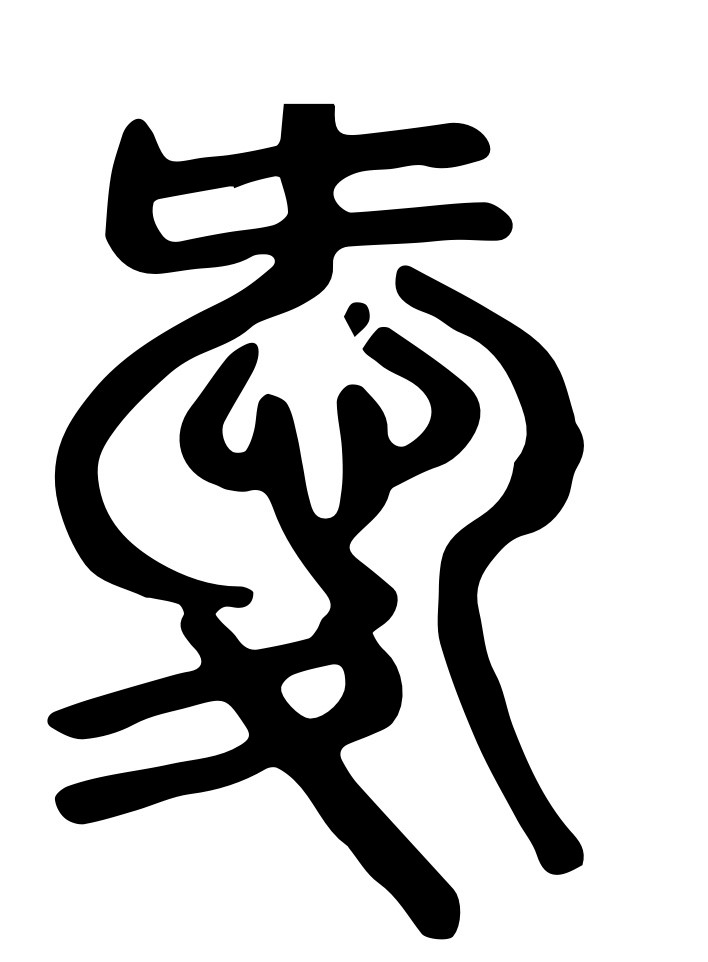
With time it evolves into this:
So I would like to think that the westerners and the Chinese agree on this: love is the tender, warm, glad feeling in your heart. Love is what we long for and what we desire for what we think is dear and pleasant. Love is a permission for you to enter my heart–and carefully should you tread, for you tread on my heart!
Yet love also could stagger as everyone of us must have or will have our own experience!
 Learn Chinese with Me
You must be logged in to post a comment.