It’s interesting that the English word ‘anger’ comes from grief and vex which, in old times, both meant ‘to cause great distress to someone’.
It’s only in late Middle English (from about 1400 to about 1500) it acquired the current sense: a strong feeling of annoyance, displeasure or hostility.
And ‘grief’, ‘grieve’ is Middle English (also in the sense ‘harm, oppress’) which is from Old French grever ‘burden, encumber’, based on Latin gravare, from gravis ‘heavy, grave’.
And ‘vex’ comes from Old French vexer, from Latin vexare ‘shake, disturb’. (It sounds very learned, but it’s not: it’s all straight from the dictionary.)
So when you anger someone, you ‘harm, oppress’ someone, you ‘burden, encumber’ someone, and you ‘shake, disturb’ someone.
And there are indeed quite a few phrases to describe it: ruffle someone’s feathers, make someone’s hackles rise, make someone’s blood boil……
All of these, as you could imagine, would cause the someone great ‘distress’: the word ‘distress’ comes from Old French destresce, destrecier, based on Latin distringere ‘stretch apart’.
So the angry one also feels “stretched apart”.
In Chinese, it too takes it in a physical sense, though it also has a completely different understanding from the Western world of this universal emotion “anger”.
“生气 shēng qì” literally means ‘give birth to (grow) air’
And the original sense of the word actually means ‘vitality’ : the state of growth of all things; the spirit and aura of living beings; a lively and energetic state.
Then it also means “get angry’.
“生shēng(give birth, grow, life, living) is easy enough, it vividly paints a picture of the grass comes out of the earth:


“气qì” (breath, air, steam, vapor) originally means cloud: the vapor that steams from the earth, rises to the sky, and falls down as rain.
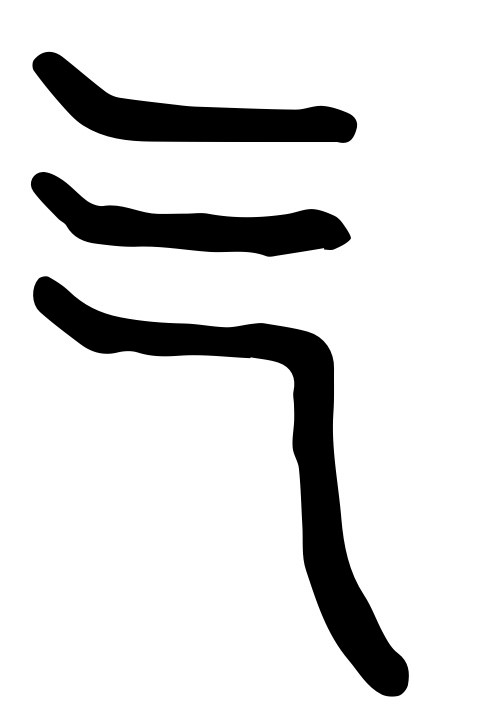
So when you get angry, your body generates some sort of air, and it comes out in the shape of shorter and faster breath.
And, like in English, in Chinese language there are many different ways to express anger, some of them mean “frustrated in the heart, depressed” (愤怒fènnù), some of them mean “flame and ache in the head” (烦fán).
So the “air” is there and it needs venting, it would come out in one way or another regardlessly.
The thing is not about the “air”, for indeed, the “air” could be a good thing–energy of life, vitality–the thing is how to let it out in a constructive, instead of destructive, way; how, when you let it out, to use it positively in a way to “enlighten” the other that you feel “harmed, burdened and disturbed”, and you would like them to stop “ruffling your feathers”.
Well, well, but what am I saying? The whole Iliad wouldn’t be if it’s not for Achilles’s rage–a higher degree of anger. And from a person’s private life to a nation’s public affair, aren’t we all witness, and sometimes doers, of the destructive way of anger?
Then we do dream and we do hope that if only each one of us could learn to let it out in the right way……
 Learn Chinese with Me
You must be logged in to post a comment.