It’s a comedy, and calls for laughter.
Shakespeare himself, it’s easy enough to tell, loves a laugh. And I wondered, as I sat amid the audiences–it was a full house, years I have been coming here, yet it’s the first time I saw that every available seat was filled: New York now is more than ready for a good laugh–I wondered, as I sat watching, what would Shakespeare think if he were here to see his play adapted this way: ‘Windsor’ becomes ‘Harlem’, though the Harlem ‘merry wives’ are certainly no less spicy, making no less merriment.
The word ‘laugh’, it’s said, goes back to old English hliehhan which may have been onomatopoeic: meaning the word itself mimics the sound of laughter.
The Chinese too heard the sound, though it’s, interestingly enough, from the laughing bamboo.
笑 xiào (the character itself, indeed, looks like laughing eyes, however, that’s only a coincidence), one way the character is explained is this: bamboos caught the wind, their bodies tenderly bending low, like a laughing person.
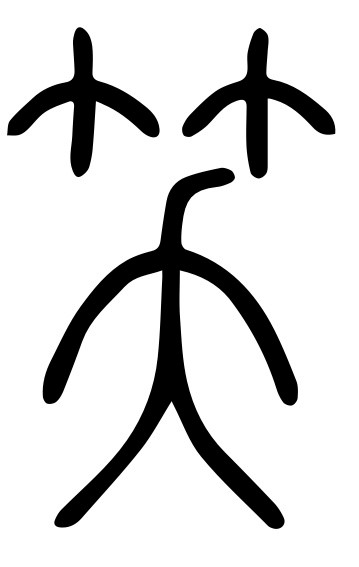
Another way 笑 xiào is explained is this: bamboo is musical instrument, the man hears music, it makes him happy, he laughs.
竹 zhú bamboo in fact could be made into several musical instruments: 笛 dí flute, 箫 xiāo a vertical flute……
笑 xiào the pronunciation also has the suggestion of picking up the sound of a laugh.
And there are in Chinese, as in other languages, different ways to mimic a laugh:
哈哈 Hāhā is a hearty, big laugh.
呵呵 Hēhē could be a gentle laughter or an indifferent, bored laugh.
嘻嘻 Xīxī could be a content, happy yet small laugh.
咯咯 Gēgē a merry giggling laugh.
嘿嘿 Hēihēi could be a cunning, or a mischievous yet cute laugh.
As roars of laughter bursted out here and there, I thought to myself, yes, Shakespeare would love this merry making: people laughing, lovers embracing, a coming feast where friends sitting around eating and drinking, a tune humming……
 Learn Chinese with Me
You must be logged in to post a comment.