“Take a break, take a break, and get your breath back!” The good-natured girl said sympathetically to her friend when she expressed, panting, her need to rest.
And off they jumped from the bikes and strolled to the lawn.
‘Rest’, the dictionary tells me, is of German origin, from a root meaning ‘league’ or ‘mile’: referring to a distance after which one rests.
The Chinese, they must already be farmers when Characters were being invented, takes a farmer’s view at the meaning of resting: it’s to walk out of the blazing sun in the field to find a tree, to find a shade; it’s to lean on the tree and rest one’s tired body.
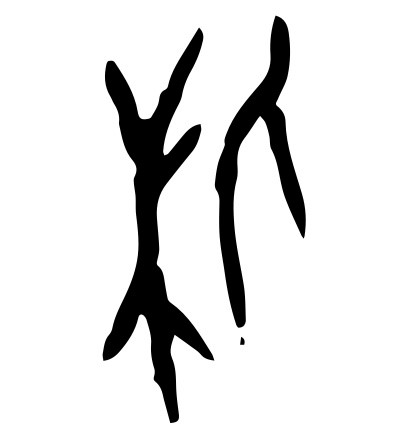
The Chinese, in its language and mind, never seperates himself from nature, the man is always a part of the whole picture, he is under the sky, he walks on earth……and he leans on a tree.
Could I say being Chinese, speaking the Chinese tongue, make one naturally a philosopher? For the Chinese knows rest is not only about the body, it’s also about the heart, the mind: one needs to stop and breath and get one’s tranquility back.
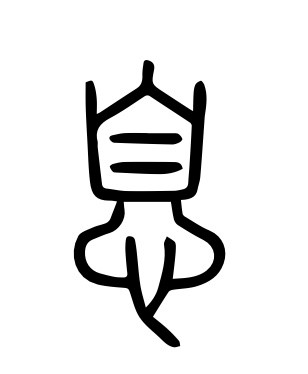
休息 xiū xī, the Chinese word for ‘rest’, has three clauses under its definition: (of a nation) recuperate and mutiply, 休养生息 xiū yǎng shēng xī; pause activities to restore physical and mental strength, 我们休息一下吧!Wǒmen xiūxí yīxià ba! ; to cease, to stop: 万物变化,固亡休息 wànwù biànhuà, gù wáng xiūxí: all things change, (the change only) ceases after death.
So let’s learn the word 休息, memorize the several phrases for 休息:
好好休息!Hǎohǎo xiūxí!休息休息! Xiūxí xiūxí! 休息一下!Xiūxí yīxià!
And most importantly, know what it is to 休息!
 Learn Chinese with Me
You must be logged in to post a comment.