In the middle of the lesson, the little boy lifts up his face, looks at me with an open and frank grace characteristic of his age, and says: “我们说再见,好吗? ” (“Let’s say goodbye, okay?” )
He does not yet know he is not being polite by saying that, being but four years old, and I could not help smiling at this truthfulness, indeed who could take offence from a child’s babble? 童言无忌 as the Chinese idiom goes.
Many wise men throughout history had something to say about politeness:
–True politeness consists in being easy one’s self, and making every one about one as easy as one can.
–A union of kindness and independence
–Politeness is the result of good sense and good nature.
–There is a politeness of the heart, this is closely allied to love.
Yet not all that said about politeness are praises, some took quite an opposite turn:
–Politeness is organized indifference.
–The most acceptable hypocrisy
–Politeness is fictitious benevolence.
–A tacit agreement that people’s miserable defects whether moral or intellectual, shall on either side be ignored and not to be made the subject of reproach.
Nietzsche even, unsurprisingly, went so far as to call politeness “that roguish and cheerful vice”.
礼貌 is the Chinese word for ‘politeness’, it consists of two characters.
礼 comes from “hold rituals and worship god for blessings”, the left side of the character is 示, the altar used in the ritual, and the right side is the vessel used in the ritual, the ancient sacrificial offerings.
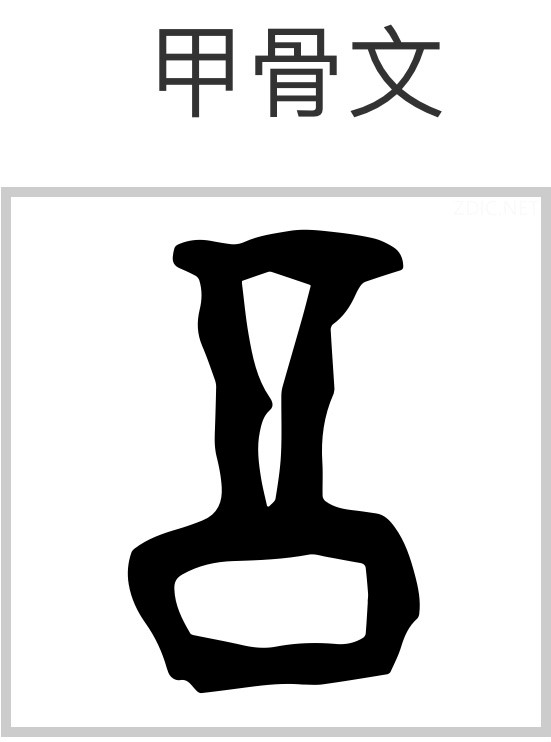

The same image of this ritual vessel was the Oracle version for 礼, the first half of 礼貌 “politeness”. The altar on the left side of the character was added later on:

貌 the second half of the word 礼貌 ‘politeness’, has the meaning of “countenance, appearance”, and it comes from the image of a human face.
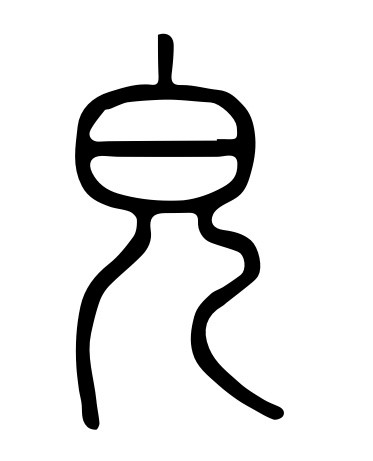
So the Chinese way of understanding “politeness” is that it’s a ceremony, it’s a courtesy, it’s etiquette, it’s a gift, it’s to respect and to worship; it’s also, an outward appearance and could be superficial.
And the Chinese, indeed, takes a sobering honest way in the expressions of most common politeness:
没关系 it does not matter, as a response to ‘sorry’, literally means ‘no relation, no impact’.
谢谢 thank you, comes from the original meaning “to decline”. (Can you wonder when, it is safe to assume, you must have clicked on ‘No, thank you.’ many times?) And that might be why at times the Chinese could feel uncomfortable when you say 谢谢 to him, because he thinks you are pushing him away to keep a distance.
 Learn Chinese with Me
You must be logged in to post a comment.