Your absence has gone through me
Like thread through a needle.
Everything I do is stitched with its color.
—Separation by W. S. Merwin
It’s like having been out in a storm for a while, even now you are safe indoors in quiet and tranquility, the wind and the rain would still remain with you and blowing in your ears and beating in your mind.
It serves the food for the brain, the companionship of someone or some event that has happened, for quiet hours, in the shape of reflections during walks and odd moments of your day when your mind is not occupied by work or cares.
The little girl, for already she knows, more than I do, that when Little Blue hangs out with Little Yellow, they could temporarily change into Little Greens. When children feel no surprise at it, we adults marvel at the simple truth that we are, maybe by being a little bit too defensive or self-assertive, mostly blind to.
We rub off our colors to each other as we are in each other’s company. And these colors remain with us after the seperation, at first perhaps vivid, then we digest it, similarize it, absorb it until it becomes a part of us, a part of what our lives are made of.
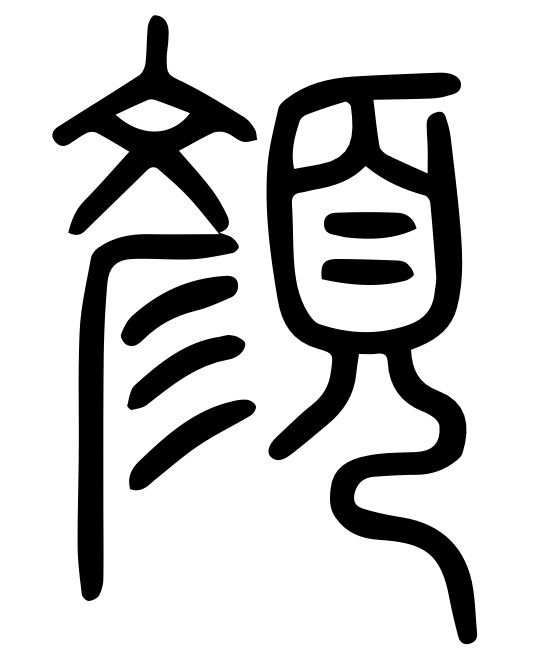
颜色, the Chinese word for ‘color’, is combined by two characters ‘颜’ and ‘色’.
颜—no you would never guess it—original means “印堂”, a medical term used in acupuncture, is an area in your face, the area at the top of your nose bridge connecting the eye-brows.
‘面容,脸色’, —face, contenance—is a natural extended meaning, and in《诗经》, Poetry, there is this delightful line:
有女同车,颜如舜华: there is a girl who is in the same car with me, her face is like a hibiscus flower.
无颜见江东父老, no face to see hometown people, this idiom comes from the man, a hero, feels ashamed of his failure, chooses jumping into the river rather than crossing it to face his family and friends. There is a poem to prove it:
生当作人杰,死亦为鬼雄。
至今思项羽,不肯过江东。
色, but it reminds me of the flat persons when you enter into the hall of Met, turn right and come to the ancient Egypt area where the people were drawn into simple lined profiles. The big ones are the rulers and the small ones are the ruled.
Strange, or maybe it’s not strange, that in all human history, or could I also say—without appearing embittered—that in many human relations there is the one dominates and there is the ones is dominated.
Because 色 is one person carries the other person on his back, and he looks up to his face.

色, from the meaning ‘face, contenance’ naturally develops into ‘good-looks, woman’s looks, beauty’ as in 姿色,美色.
Then ‘lewdness, erotic’, there is a movie Lust, Caution, 《色戒》.
In Buddhism 色 means ‘the material appearance of things’, think of the sober plain color of all religious garments.
So the Chinese word for ‘color’ 颜色 originally means a person’s face, his contenance, there is this phrase 和颜悦色, pleasing contenance.
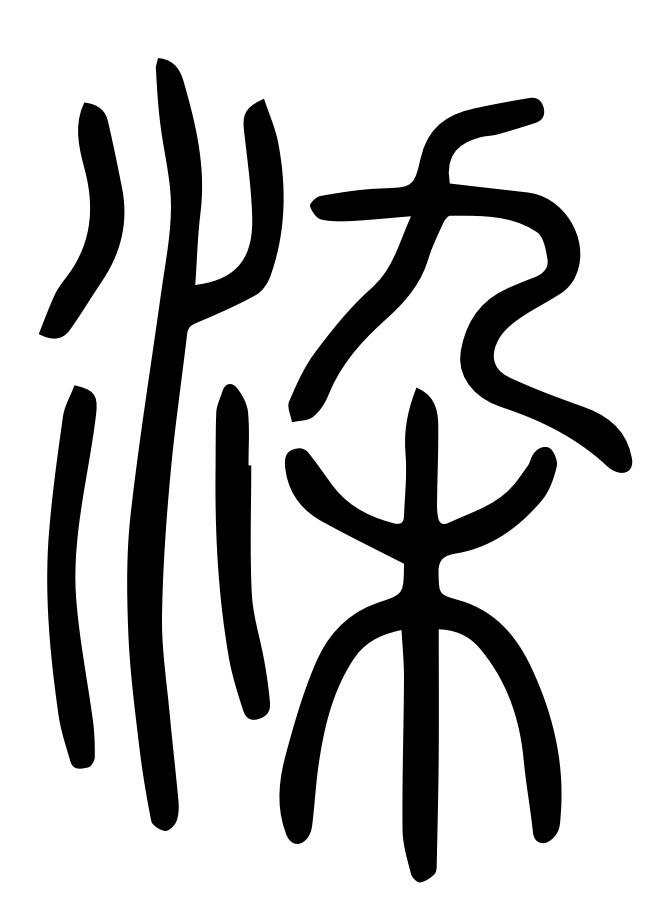
染 to dye, is self-explained: there is wood in it as ancient dyes are mostly derived from plants, there is water in it as dyes must be processed into liquids, there is the number—九—nine in it (here means multiple times) as the dyeing must be repeated.
And the story goes, the little girl listens with rapt attention, that the Little Greens eventually change back to Little Blue and Little Yellow, yet, they were Little Greens for a while, and the memory of it must have been recorded in mind and body.
And I take my walks and go on with my daily occupations, yet last night seems to set up a persistent background of all things I do and it colors up me and all my thoughts.
 Learn Chinese with Me
You must be logged in to post a comment.