Ages and Years

I don’t believe in ageing. I believe in forever altering one’s aspect to the sun.

——Virginia Woolf

“I’m seven.” The little girl lifted up her face and answered my question. Then she eagerly added: “I’m almost eight.”

I could only smile at this impatience to grow up. “Well.” I thought to myself, looking at this bespectacled little person. “There will be time to come when you wouldn’t be so eager to add another year to your age.”

There will be a time indeed age will become a sort of terror story for, maybe, every woman. One year flies away then another, and you stand in front of the mirror and tell yourself you are this or that years old with some helplessness, with a certain incredulity: it seems it’s only yesterday I was twenty-one! Where did all these years go? And oh my! Yes, there will be a time that it’s scarier than any scary movie to just repeat to oneself one’s age in front of a mirror.

No. You cannot stop it. No one can escape it. The years, like hills or mountains, one after another, will just come to you, pile up on you, heavier and heavier, until it bends your back and makes you pant at every small exertion.

And yet, one needs not to be completely passive for all that. One can have one’s defiance even against ages and years.

One way to do it, maybe, is by standing back a little and observing oneself like a third person, or for that matter, to observe human life like someone who is standing on the outside.

You are, certainly, not like that little girl who is seven and almost eight years old. Yet there are moments in your days that you certainly feel like an eight years old: you were undeniably once an eight years old.

Of course you need not to repeat all the follies in your twenties. Yet you do not need to be ruled and told and confined by ages and years, you could turn the table around, and up to a certain point, become the ruler yourself.

So we are all given, from the bright-eyed newcomers crawling so energetically on the floor to the slow tottering steps behind a push car who are approaching the end of their journey, we are all given a certain amount of years. And it’s up to us how to define and use these years.

When looking into the origins of characters, frequently you cannot help but respect the sound practical sense of the ancient Chinese: they seem to forever set their feet on firm ground.

年nián, year, the ancient Chinese way to understand it is: ripen of grains. As most grain crops are annual plants that you harvest once a year, it makes sense that one circle marks a year. Indeed the lunar calendar, the traditional Chinese calendar, makes acute observations of the time and season to sow the seeds or harvest the crops.
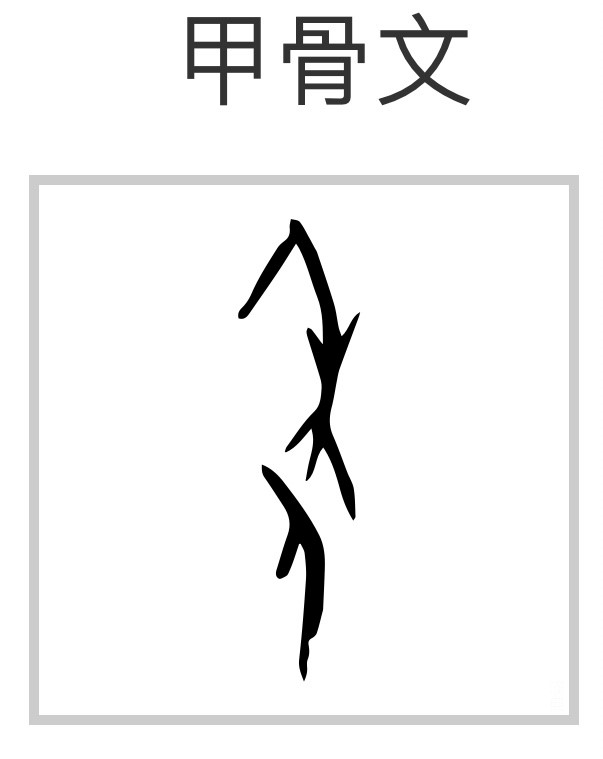
The Oracle version of 年, the upper side is the crops 禾, the lower side is the humble human, 人. 年, year, is an image of human carrying his harvest home.

岁suì, age, the modern version of the character fits my explanation nicely: the upper side is the mountain 山, the lower side 夕, a possible alteration from the origin of 步, steps (one could see the legs), it’s the mountain on top of the walking legs. Though it’s likely I have made this up to suit my own purpose: there is no evidence that 山 is there for this reason, and the alteration from 步 to 夕 is, at the best, a guess work.

岁, as I look at the dictionary, has two entertainingly different origins: an axe and Jupiter.
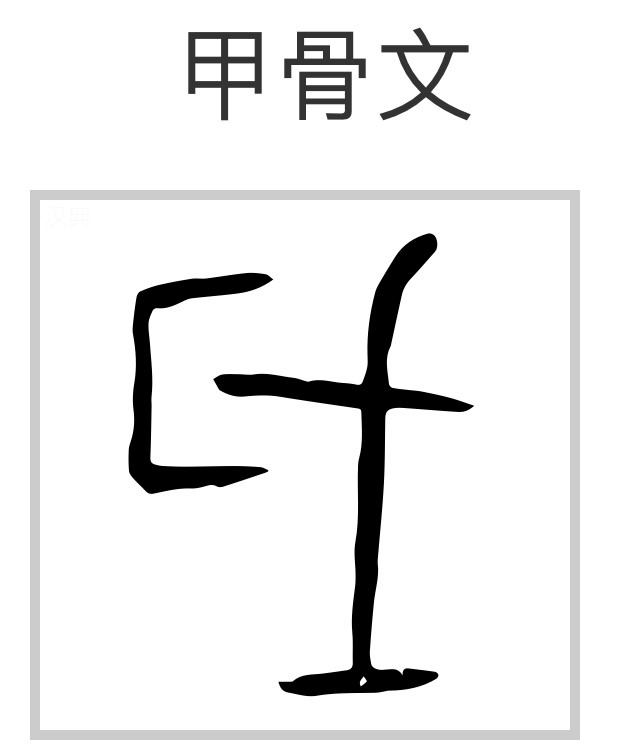
The Oracle verison is the image of an axe. One could see the handle and the blade. Axe is related to harvest, and harvest to years, and years to ages.

The explanation that 岁 age, year, means Jupiter is that it takes one year for Jupiter to travel its orbit, and it appears once every twelve months.

Still a woman becomes reluctant to reveal her age after a certain point, still I repeat to myself, what once Virginia Woolf has said to herself: I don’t believe in ageing. I believe in forever altering one’s aspect to the sun.

This week, millions and millions of the descendants of these characters’ creater are celebrating 年, year. The harvest now, for most people, must be in an abstract form. We look back at the year that’s gone to sum up our losses and gains, we look forward to the coming year to wish for a better harvest. May you, in the next twelve months, gather and pick and reap an abundant harvest to nourish both body and mind.

Children

To teach children is something very much like to deal with life: it’s better to have a plan, and it’s folly to expect everything to go according to plan. For these little people have the ingenuity to thwart it, indeed for them it’s difficult to sit still for more than five minutes and it’s irresistible to climb on the table, or hide in the gap between the wall and closet, for the seventh time.

Yes, it is very much like living a life, it’s good to have a plan, to always keep it in mind and know what you are about, but when things do not go as you expected—as they often do—you will have to be patient and flexible and take whatever comes and make the best of it.

As at the end of the day it’s the best moments you want to recount and remember and comfort yourself with the illusion that you have lived to the fullest of this day of your life.

At the end of the lesson—as at the beginning of the lesson you would smile and laugh and show that you are happy to see them and be with them—at the end of the lesson, praise their good behaviors, for naughtiness is really the norm of children, it’s the good behaviors you want to point out, so praise their good behaviors, shake a tiny hand or give a hearty hug and thank these little people for learning with you.

It’s so long ago, it’s so far away, that we often forget we were once them, that we grew up from that. The three-year-old girl, now as we grow more and more familiar, claims a closer and closer acquaintance at each lesson.

“Now if you are vaccinated……” She all of a sudden bursted out.

It made me laugh to hear so little a girl use a word that normally children at that age would not have known.

My laugh evidently pleased her, for she tried out the phrase again as she watched closely my reaction, and when I smiled, maybe rather guiltily for I wanted her to focus on the lesson, she laughed out in such a hearty way as only a child can.

孩hái, children, is an onomatopoeia, that is, it’s created by resembling the sound of a baby, a child’s laughter, and if you pronounced it and were ready enough to believe, it does sound like the laughter of these little people.

Peter Pan, the child who refuses to grow up, says the beginning of fairies comes out of the laughter of a baby.

There is indeed something wonderful and healing(“The soul is healed by being with children”.) in the sounds of children’s laughter. And it must be to the credit of the Chinese that he made a character from so delightful a source.

This character takes the main method of Character-creating: one part tells the meaning, the other part tells the pronunciation. In this case the left side 口 mouth, indicates the sound, the laugh, the right side 亥 hài suggests the pronunciation. Later 口 changed into 子 and we have the modern version 孩.

The nouns in Chinese, when we name things, are normally formed by two or three characters or two or three syllables, as each character is one syllable. It makes linguistic sense to name a thing with more than one syllable. As there are, not considering the tones, only a little over 400 syllables in Chinese language, that means many characters share the same sound, and it would be too difficult, if not impossible, a communication if the nouns are formed by one syllable.

So there is a second character, a second syllable in Chinese for children: 子zǐ, unlike the first one 孩, 子 is a pictogram, that is, it resembles the image of a baby in her swaddle.

This is how the Chinese sees a swaddled baby: the head, the arms and the two feet were together.

子 now often is used as a suffix to form the second syllable of a noun, such as 杯子,桌子,房子…… and it’s a common radical for characters, such as 学,孝,孕……

It is challenging. It is interesting. It requires patience and flexibility. It is at times disencouraging. But oh! It is such a pleasure, it is such an adventure! And it is with gusto, maybe partically as a shared responsibility of all adults, it is with gusto that one shows up and greets these little people!