What Makes a Home?

We all know that the humans, urged by their bellies, at first, foraged and hunted and moved about and sheltered themselves in any cave they could find.

They did not have a home. The whole world was their home.

When did they build their first homes? And if you dwelt at one place instead of moving about searching for food, you will have to be able to satisfy your most basic need–feed your belly–at or around your dwelling place.

The Chinese character for “home” explains when and how they did this in a vivid way. This is how they scratched on a bone(they did not have paper yet at that time) to mean the word “home”:

The upper part is the roof, the house–the picture any child would draw for a home, and the lower part, can you guess what it is?

If that’s not obvious enough, how about this one?–after thousands of years, it evolved into a more picturesque way:
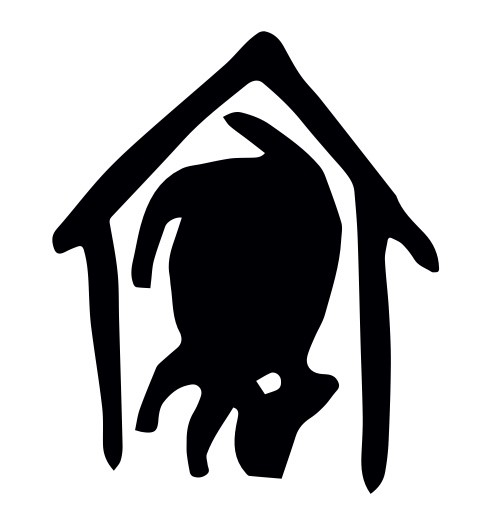
It’s plain enough to see the house, nor it’s difficult to see what’s in it: an animal, a pig.

But, I hear you asking, what does pig have anything to do with it?

Well, how do you think it’s possible for them to settle instead of chasing after animals for food?

Keep the animal, keep the food, at or around your dwelling place.

Pig still is the most common household animal in China, and pork the most common meat: history is not very far away.

Till this day, in villages where the industry lifestyle still has not eliminated all the ways of traditional living, there are still households keeping pigs in their yards for the feast of the New Year or, for that matter, any feast.

With time, it evolved into this one which the ancient Chinese used for a very long time:
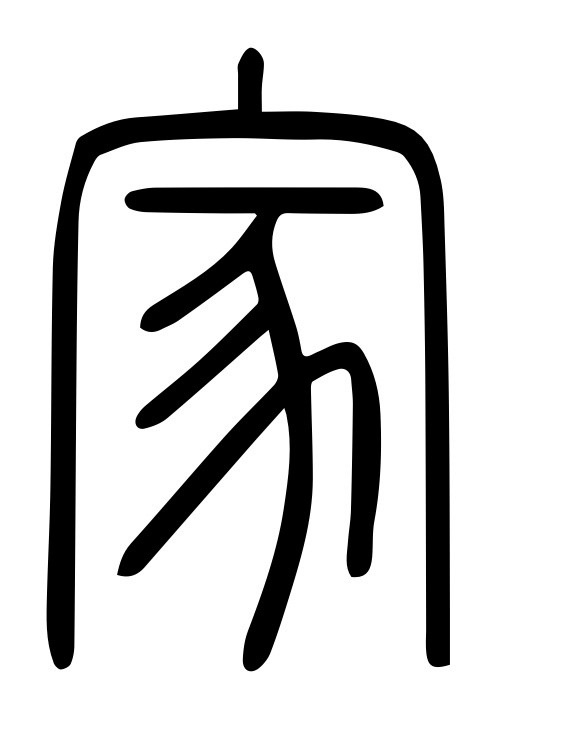
The house is still clear enough, the pig though, becomes more abstract: you could still see the head, the body, the front legs and the back if you looked hard enough.

And this character 家jia1, eventually becomes this one which we use today:
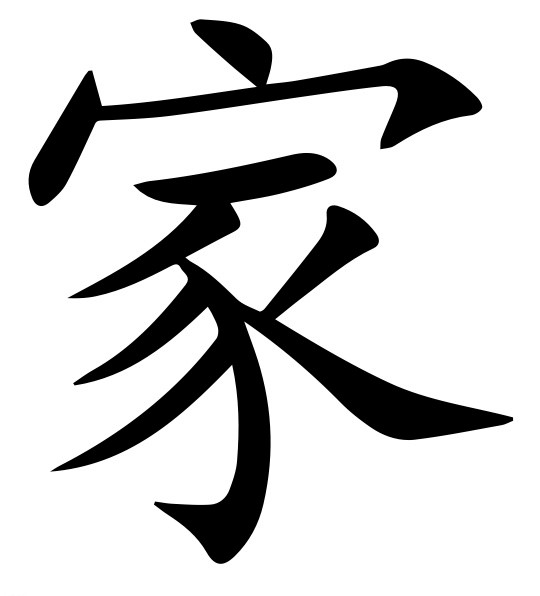
The upper part, the house, simplified into a roof, the lower part, the pig, becomes more difficult to tell its origin.

It’s not very romantic, is it? But how practical it is!
Let’s Talk About Beauty

What do you think of beauty? What is beautiful for you?

If you could imagine, say, you were the very first human beings standing up straight on two legs and for the first time observing the primeval world, what would you think it’s beautiful among all the things you see?

The sky? The birds? The trees? The flowers?

For the English, for the Westerners, beauty is what is “good and fine”. The English word “beauty” comes from an old French word beaute which derives from the Latin word bellus that means “beautiful, fine”.

The Chinese though, have a very different way of thinking.

First, do we agree that life is difficult? Do we echo what Plato said thousands of years ago that “Be kind, for everyone you meet is fighting a hard battle” ?

Now think again! Those very first humans, standing awkwardly on their two newly erected legs in a brand new world; a world unknown to them; a world in which they have to forage and fight to meet their urgent wants.

So what would they think is beautiful when they are all hungry and cold?

The Chinese knows!

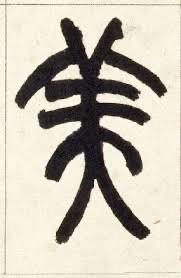
The Chinese word for beauty–美 mei3–explains it.

The upper part of the word means “sheep”, and the lower part means “big”.

So beauty for the Chinese is no more than a big fat sheep. Indeed when you are standing on your two just straightened-up legs shaking in the cold and hungry, what could be more beautiful than a big fat sheep that offers you food and gives you wool to protect you from cold?

It’s only when you are fed and warm, you have the mood to look at the woman sitting next to you gnawing the last bit of the lamb and thinking you are in your heart: This is another sort of beauty!

The word 好hao3, now means “good, healthy”, originally means “beautiful”, and what is beautiful?

The Chinese, of course, again knows!

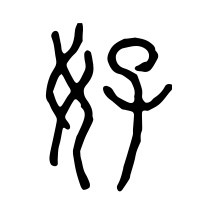
A woman! For the character explains itself: 女子nü3zi means “a woman”, and it looks like this in the beginning:

And yes, the woman, of course, like Madonna, is caring for a child: the left part is the woman and the right part the child.