Between Laughter and Tears

At times, it’s no use to tell them to do this or to do that: they would just insist on imitating what you are doing. As I looked at the little girl on the screen and sent her a “clapping hands” for her effort, her eyes lit up and she at once asked me in an eager tone “how do you do that?”

She then said to me what I just said to her “我给你 Wǒ gěi nǐ….”(I give you……) and sent over what she chose to click.

“他在哭还是在笑? Tā zài kū háishì zài xiào?” (Is he crying or laughing?) I looked at it and asked her.

“Well, those are happy tears, he is laughing.” The little girl informed her slow-witted elder.

A piece of news I read later told me that this now re-popularized emoji was actually chosen by Oxford Dictionary in 2015 as the word of the year. “For the first time ever, Oxford Dictionary has chosen a ‘pictograph’ as its word of the year. They say the ‘face with tears of joy emoji’ best represents ‘the ethos, mood and preoccupation of the year’.

It’s said this emoji has been extremely popular in China. And unsurprisingly, there is actually a Chinese idiom to echo this ‘pictograph’: 哭笑不得 kūxiàobùdé literally ‘cry laugh not get’: not to know whether to cry or laugh, both funny and extremely embarrassing, between laughter and tears.

哭kū, to cry, at first sight it’s easy to mistake those two squares on the top for eyes and the dot below for the tear. Though the origin of this word comes not from the image of tears but from the sound of howling, the squares are not eyes but a wailing mouth:
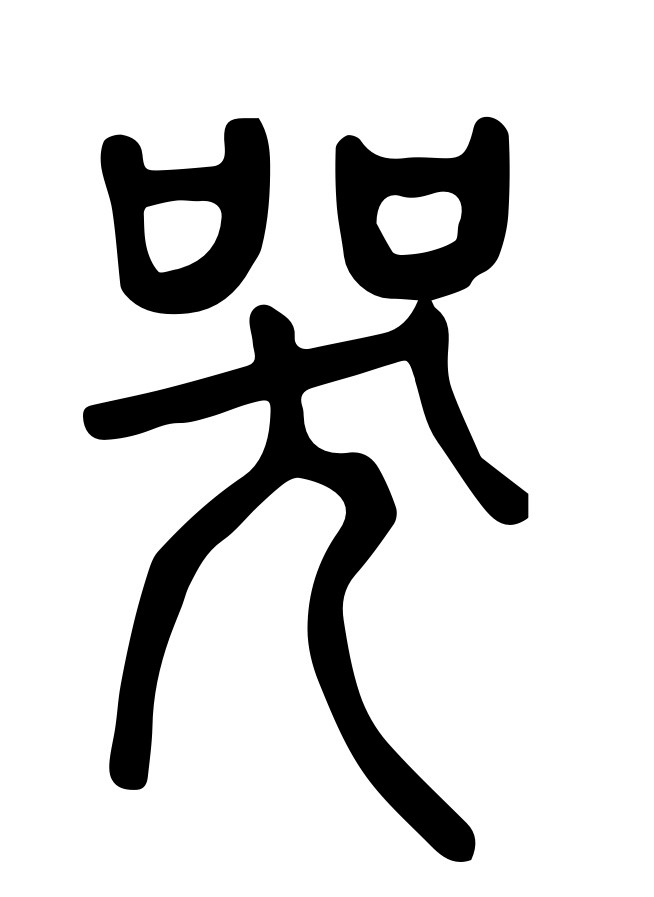
The upper part actually is 口 kǒu, the bawling mouth, and the lower part is the image of a grief-stricken person who screams out his sorrow, he beats his chest, he stomps his feet.

The explanation of this character might, perhaps, remind you of a howling child you would occasionally see: they do bawl out in so loud and bitter a tone, waving their hands and stomping their feet in front of an–sometimes embarrassed, sometimes nonchalant–adult. And I often cannot help but look up amazed: what bitterness must inspire that hearty wailing? (Often, no doubt, it is small things like: he needs to go home to take his nap……)

At creating this character, the Chinese might have looked at the howling child, or he might have looked at an adult who is crying out his real woes:

The evolution of this character. The first one, you could see that the sad person opens his mouth big to cry, in the second one the mouths now are on the top and the person now has tears and grief-shaken legs, in the third one the person seems to be floored by the unbearable sorrow, and the fourth one is the one now we use today.

For the little girl–children, if you allowed them, have amazing ability to make up stories–it is happy tears, and who is to say it is not? And may we all in our long lives have more tears like those.

But what about yourself? What is a 哭笑不得 situation for you?
It’s About Love

“It is privacy.”

To my question “What is love?”, answered me a seven-year-old girl in a calm and matter-of-fact manner as if I just asked her what her favorite color is.

That’s in a way related to the origins of the English word “love”.

“Love” comes from an old English word lufu; also from a root lubhyati “desire’, Latin ibet ‘it is pleasing’, libido ‘desire’, also by leave ‘permission’ and lief ‘dear, pleasant’.

So there is a lot to say about love.

First it is a desire, and this word desire too has an interesting origin.

Imagine in the beginning of human history where there were barely any man-made things around you: no buildings of any sort, no roads, no cars, no…..basically most of the things come into your sight when you walk down on a street in modern times.

So when you are out in the open on a clear, cool autumn night sitting in front of a nice campfire, what do you see when you look up?

Yes. Millions of stars!

It must have inspired the human heart in the same way since that very first humans looked up. There is even the same phrase both in English and in Chinese “reach for the stars”–伸手摘星 shen1shou3zhai1xing1.

“Wonder of wonders” thinking in the heart of the first Homo sapiens. “What are they? Bright and blinking?” And the longer he looks at them, the more mysterious, the brighter they appear. Unconsciously, he reaches out his hand: “down the stars!—I de-sire!”

And that’s–possibly–how the word “desire” comes from: de-‘down’ + sidus, sider-“star”. (And considering that with no books, no TV, no phone, no computer, the first humans must have spent a considerable amount of time on looking at the stars, for the word “consider” examine, is also based on sider, stars. Indeed, an awful lot of things they have figured out by examining the stars.)

Do not little children, puppies, or the first flowers, the first softest greens in spring time inspire some warm, glad, tender feelings in you? For “it is pleasing”, and the Romans, the Latin-spoken people call this feeling ibet, love.

Now when the seven-year-old girl answered me what she thought was love for her, she hit on the sense that it is a permission.

It is a permission, it is an invitation, it is a trust. So now I open my door to you, I show you my most private, my most vulnerable self. I could cry and I could laugh and I am in my most comfortable skin for I am with the person that loves me and I love.

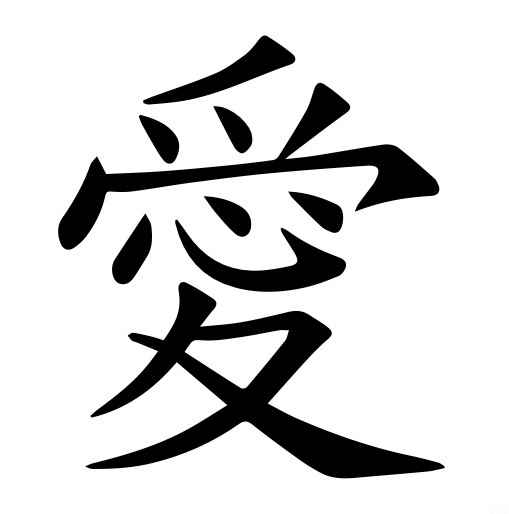
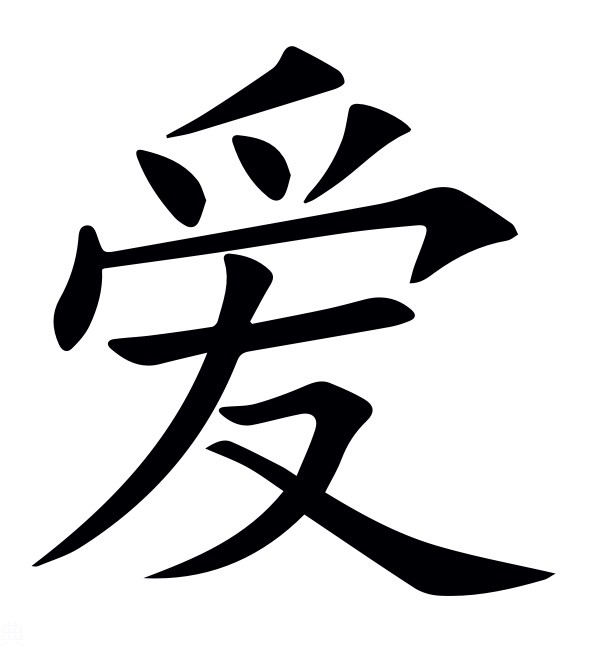
The Chinese word 爱 ai4–after a whole morning’s search and think and consider–it still puzzles me.

The upper part means hand–I would like to think it implies touching, caressing, the lower part means friend.

But this word is simplified only not very long ago–given the long history of how language evolves–from the traditional version:

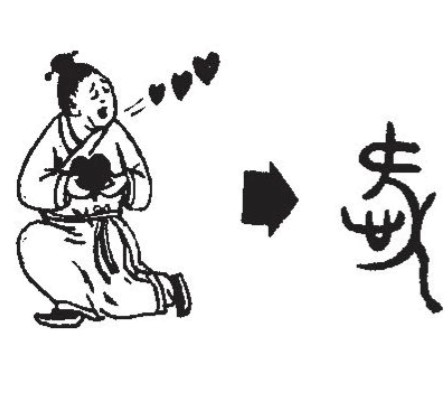
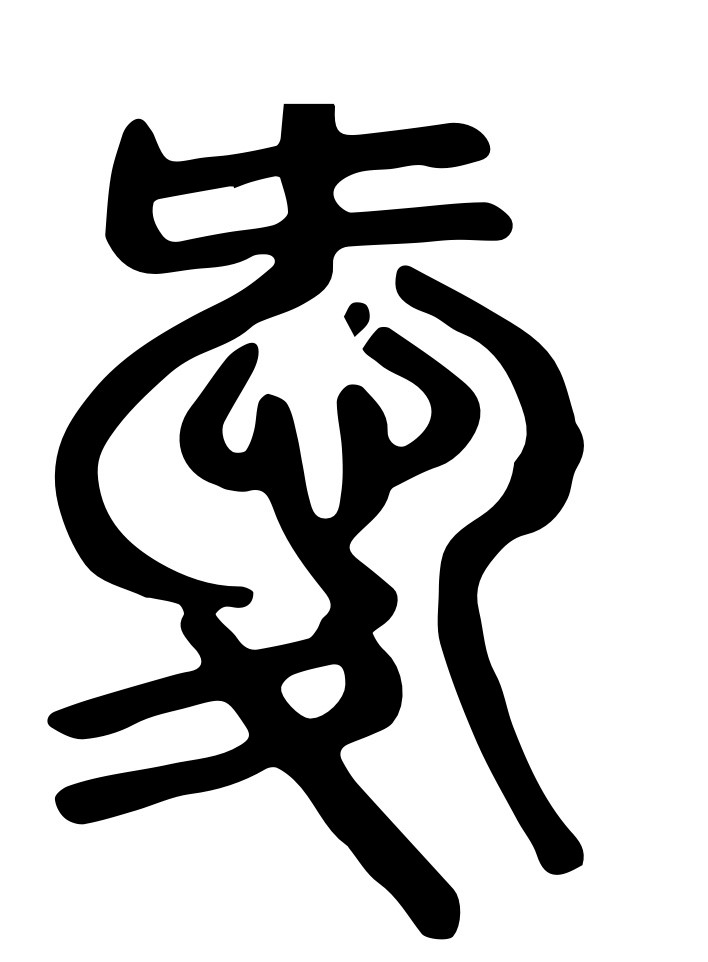
The difference is there is a “heart” in the middle in this version, and the lower part is no longer “friend” but it means ‘two unstable legs”: staggering: the lover now deep in his longings eats without tasting his food, and staggers–instead of walks–around as if lost: Does it echo Plato’s saying that “love is a serious mental disease”?

And it all comes from a guy who staggers around longing to show his heart to his lover:

The staggering legs and the heart still show in the traditional version of this character that is in use till this day.

With time it evolves into this:

The heart and the shaking legs are still there!

So I would like to think that the westerners and the Chinese agree on this: love is the tender, warm, glad feeling in your heart. Love is what we long for and what we desire for what we think is dear and pleasant. Love is a permission for you to enter my heart–and carefully should you tread, for you tread on my heart!

Yet love also could stagger as everyone of us must have or will have our own experience!